

Stop Walking and Talking if You Want to Make a Point
You’ve probably seen it before.
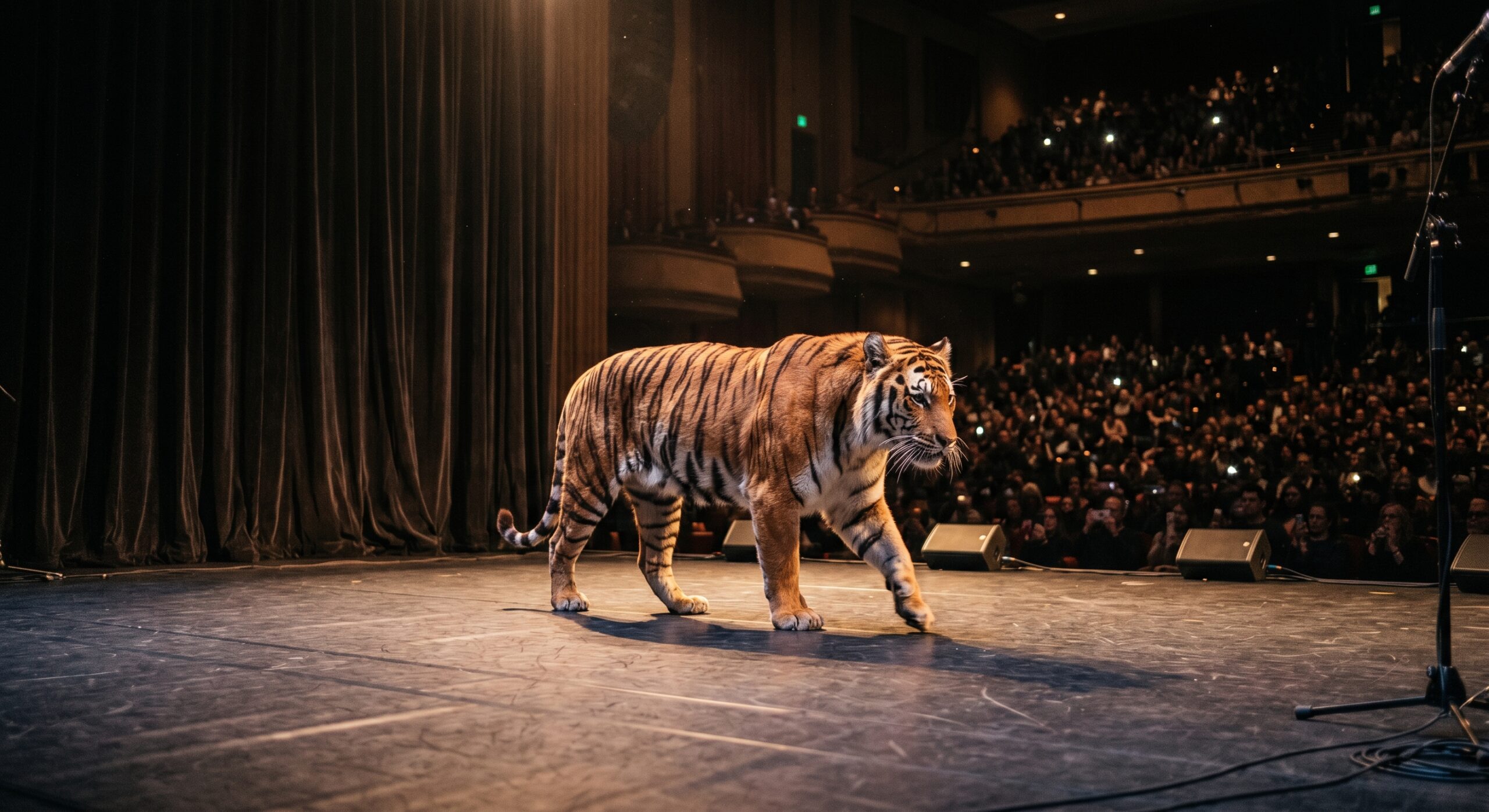
A comedian walks onto a stage with a microphone and immediately starts wandering. Back and forth. Circles. Aimless pacing. Stopping for water. Talking while moving. Moving while talking.
And strangely, it works. Partly because comedians are creating a different kind of experience. Their audience isn’t trying to retain a complex business idea or absorb strategic information. They’re there to enjoy the ride.
Many business presenters unconsciously copy that movement without realizing the difference, and it weakens their message.
One of the first things I notice when coaching speakers is unnecessary movement. The moment nerves appear, people start pacing while they talk. They drift across the stage as they explain important concepts. They walk through the most critical point in the presentation without ever planting themselves long enough for the audience to absorb it.
In the speaking business, it’s known as the “tiger walk.”
Like a tiger pacing the edge of a cage.
It’s rarely intentional. Usually, it’s nervous energy looking for somewhere to go. The problem is that movement changes audience attention. When a speaker is constantly moving, the audience’s brain splits focus between the message and the motion. Instead of fully listening, they start tracking movement.
This becomes especially problematic when the content itself is already cognitively demanding. If the audience is trying to process a strategic idea, technical concept, or important recommendation, excessive movement quietly adds another layer of mental load.
The result is subtle but powerful. The speaker feels less grounded. The message feels less clear. Authority quietly decreases.
Strong speakers understand that movement itself communicates meaning.
A step forward can create emphasis. Crossing the stage can signal a transition. Stillness can create gravity.
In fact, some of the most powerful keynote moments happen when a speaker stops moving entirely.
A planted speaker delivering an important line with intention often creates far more authority than someone pacing with high energy.
One simple technique I teach clients is this:
If your lips are moving, your feet should not be.
Move. Plant. Speak. Pause. Then move again.
That small adjustment alone dramatically improves executive presence because audiences begin to feel clarity, confidence, and intentionality.
This doesn’t mean speakers should become statues. Energy matters. Presence matters. Physicality matters.
But random movement is not the same thing as purposeful movement.
The best presenters use space strategically. They direct attention both physically and verbally. Every movement should mean something: a transition, a contrast, a shift in energy, a new section, a pause before a reveal.
Otherwise, movement simply becomes nervous energy with expensive shoes.
And audiences can feel the difference.
Related Articles
More insights to help you strengthen your communication.

“
It’s not about perfection.
It’s about showing up with clarity and confidence.
”
You have the expertise.
I help you deliver it.
They remember it.
 Got a presentation coming up?
Don't wait until the night before, show up prepared and polished