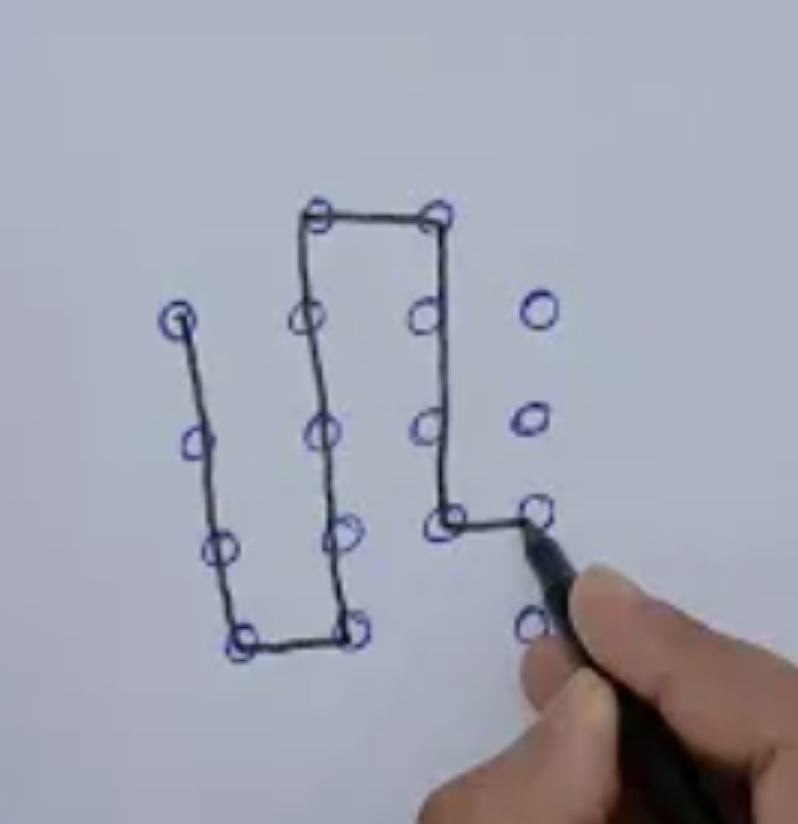
At first, it looks like a random mess of numbers.
No pattern. No meaning.
Then you start drawing the lines…
…and suddenly it’s a dog. Or a dinosaur. Or something you’re oddly proud of.
It only works because the connections are clear.
That’s What a Good Presentation Should Feel Like
Clear.
Connected.
Obvious in hindsight.
Your audience should be able to follow the line from one idea to the next without effort.
But that’s not what most presentations feel like.
What Most Presentations Actually Look Like
They feel like scattered dots.
- Slide one: data
- Slide two: a framework
- Slide three: a story
- Slide four: another idea
Each piece is solid.
Smart. Thoughtful. Well-prepared.
But together?
No clear picture.
The Hidden Problem
When your presentation isn’t clearly connected, your audience has to do the work.
They sit there trying to figure out:
- How does this relate to the last point?
- Why are we talking about this now?
- Where is this going?
And here’s the truth:
They won’t do it for long.
Not because they’re not capable.
Because they’re busy. Distracted. Thinking about their own priorities.
If your message requires effort to follow, you lose them.
Your Job Is to Draw the Lines
Your audience shouldn’t have to connect the dots.
You should do it for them.
That means being explicit—more explicit than feels natural.
Instead of moving from one idea to the next and hoping it makes sense…
Say it.
What This Sounds Like in Practice
Add clear connections between your ideas:
- “This leads to the next issue…”
- “Here’s how this connects to what we just saw…”
- “Because of that, we need to shift our focus to…”
- “Let me show you how these two pieces fit together…”
It might feel obvious to you.
It’s not obvious to them.
Structure First. Slides Second.
This is usually not a slide problem. It’s a thinking problem.
If your ideas aren’t connected in your mind, they won’t be connected on the screen.
Before you build slides, ask:
- What’s the through-line of this presentation?
- What is the audience meant to understand by the end?
- How does each section move them closer to that?
If you can’t draw the line clearly, neither can they.
A Simple Test
After you outline your presentation, try this:
Explain it in three sentences:
- Here’s the situation
- Here’s the problem
- Here’s what we need to do
If your slides don’t support that progression, you’re likely showing dots—not a picture.
One More Thing Most People Miss
Connection isn’t just logical. It’s verbal.
Even if your ideas are well-structured, if you don’t say the connections out loud, your audience still has to infer them.
And inference is where attention drops.
The Goal
By the end of your presentation, your audience should feel like:
“Of course. That makes complete sense.”
Not:
“I think I get it…?”
Final Thought
A great presentation doesn’t just present information.
It reveals a picture.
And your job is to make that picture so clear…
No one has to guess what they’re looking at.







 Got a presentation coming up?